
The Art of Kaapi: Why Filter Coffee Deserves a Dedicated Master at Your South Indian Wedding

There is no beverage in the South Indian cultural imagination that carries more daily weight than filter kaapi. It is the first thing offered to a guest who crosses the threshold — before conversation, before food, before anything else has been arranged. It anchors the early morning, marks the end of a long afternoon, and appears at every significant gathering as
both a gesture of welcome and a quiet measure of how seriously the host takes their guests.
At a wedding, that measure matters more than most hosts realise.
And yet, filter coffee is the element most consistently planned lesser at South Indian weddings.
A large vessel brewed hours in advance, kept lukewarm on a burner, dispensed by whoever happens to be free — this is the fate of kaapi at most events, and it is a quiet disservice to an occasion meticulously planned in every other respect. Guests accept it because they are used to it. That does not mean it is good enough.
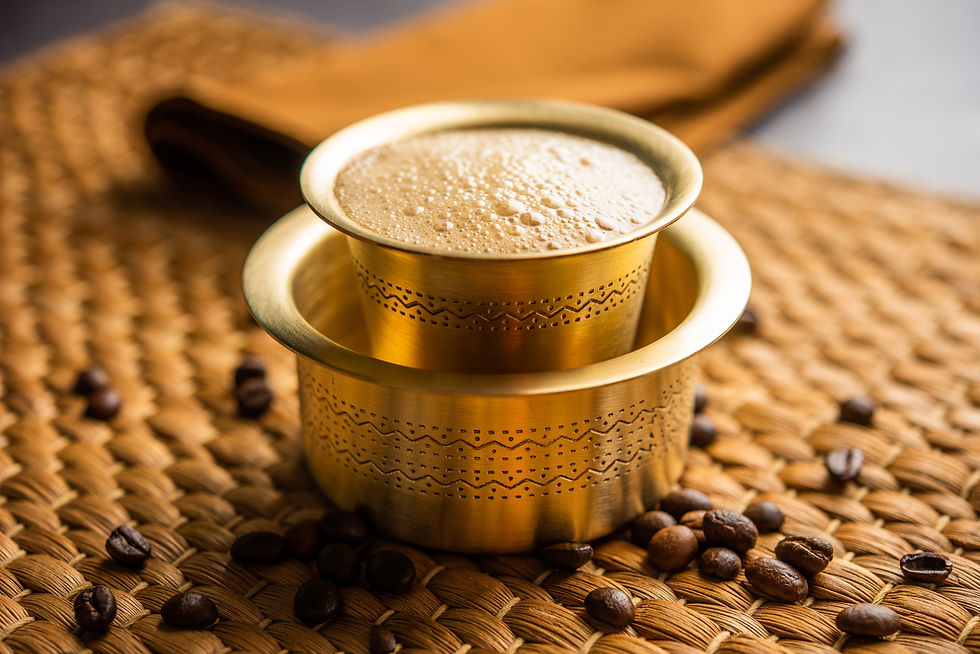
The Foundation: Bean, Blend, and Decoction
The humble two-tiered stainless steel coffee filter remains one of the great achievements of the South Indian kitchen — designed around patience and gravity, allowing a slow extraction that coaxes everything worth having out of the bean without force or aggression. But the quality of what comes through that filter depends entirely on what goes into it.

At Haritham, we source our beans from the high-altitude estates of Chikmagalur, where the iron-rich, nutrient-dense soil produces a coffee with a flavour complexity that flatland-grown beans cannot match. High-altitude cultivation slows the maturation of the coffee cherry, concentrating its sugars and aromatic compounds — which is why these beans are among the most prized and most expensive in the country. We consider that cost non-negotiable.
Our blend is built on a precise ratio of seventy percent Arabica to thirty percent Robusta. The Arabica brings delicacy and brightness; the Robusta brings body and depth. Neither alone produces what both together achieve, and getting that ratio right is something we have refined over years of brewing for large wedding crowds.
Milk, for most wedding caterers, is an afterthought. For us, it is half the cup. We boil milk in five-litre batches rather than large industrial quantities, because smaller batches retain the natural creaminess of fresh full-fat milk — the kind that shows up in the texture of every cup and that no thin, over-boiled milk can replicate.
The Kaapi Master: An Artisan, Not a Server
At every Haritham event — large or small, indoor or outdoor, in Chennai or outstation — you will find a dedicated Kaapi Master at a fixed coffee counter. Not a server pulling double duty, but a specialist whose entire presence at the event is anchored to this single responsibility.
His most visible skill is the meter pour — the back-and-forth arc between tumbler and dabarah that produces the nurayum porayum, the froth every South Indian instinctively looks for before the first sip. This froth is not decorative; it aerates the coffee and brings it to exactly the right drinking temperature. A cup without it feels, to anyone who grew up with proper kaapi, somehow unfinished.
Beyond the pour, a true Kaapi Master reads the crowd. At any South Indian wedding you are dealing with two hundred individual relationships with coffee, each shaped by decades of personal habit. The paati wants it strong, sweet, and piping hot. Her grandson wants less sugar. His mother asks for jaggery. The periappa from Bengaluru wants it lighter. Someone returns for a second cup and asks if it can be slightly stronger. Our masters adjust for all of this without making any guest feel like an inconvenience — because genuine hospitality does not come with a standard setting.
Generosity as a Principle
Many vendors operate with a strict cut-off, leaving guests who arrive late or linger into the evening without a warm cup. At Haritham, if a Kaapi Master and coffee counter has been included in your event, it runs for the full duration — no expiration timers, no winding down early. The last guests heading out deserve the same freshly brewed, properly poured kaapi as the first guests who arrived for the Ganapathi Homam at dawn. Our guiding principle, in coffee as in everything else, is Atithi Devo Bhava — and God does not get a lukewarm cup from a flask that stopped being refilled two hours ago. Why This Matters
Filter coffee at a South Indian wedding is the social glue — it sustains energy through long Vedic chants, anchors the unhurried conversations between rituals, and quietly signals to every guest that they are in the hands of hosts who pay attention. Wedding catering has grown vastly more specialised over the years, and the filter coffee counter, properly staffed and properly run, belongs in the same category as every other specialist service on your event plan.
At Haritham, when someone walks away from your wedding saying the kaapi was exceptional, they are really saying something much larger about the kind of hosts you are. We make sure you already know the answer to that.


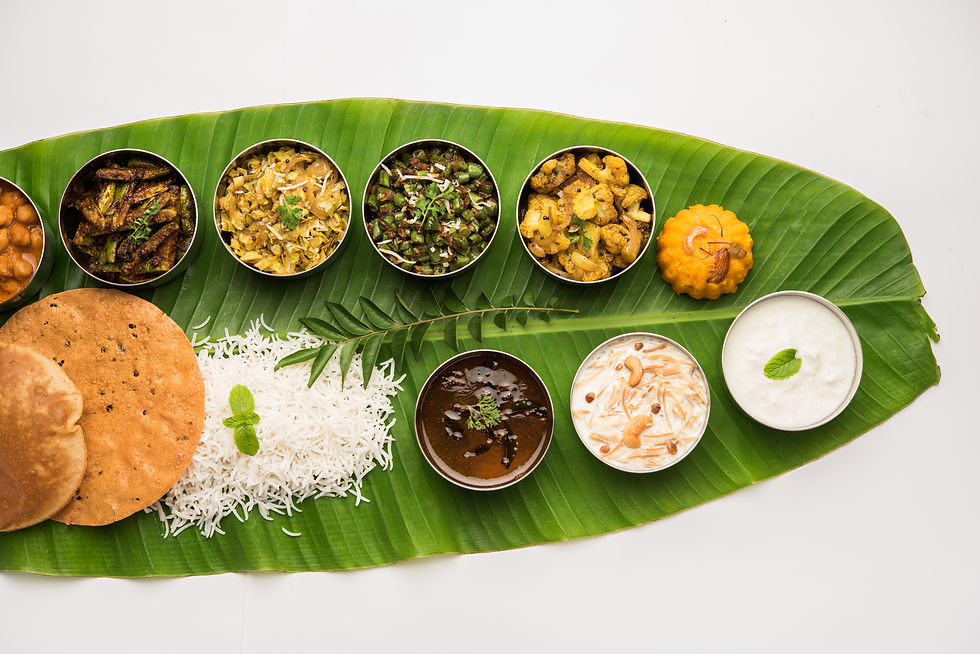
The Art of Kaapi: Why Filter Coffee Deserves a Dedicated Master at Your South Indian Wedding lies in its rich aroma, authentic preparation, and cultural significance. A skilled kaapi master ensures every cup is brewed to perfection, offering guests a truly traditional experience that adds warmth and charm to your celebrations. From early morning rituals to post-meal servings, filter coffee becomes a memorable highlight that reflects heritage and hospitality. Its distinct taste and presentation elevate the overall wedding experience. To execute such thoughtful details seamlessly, hiring a professional event planner in Indore can help you manage every element with perfection and cultural finesse.