
South Indian Wedding Menu: The Art of Curating the Perfect Kalyaana Saapadu

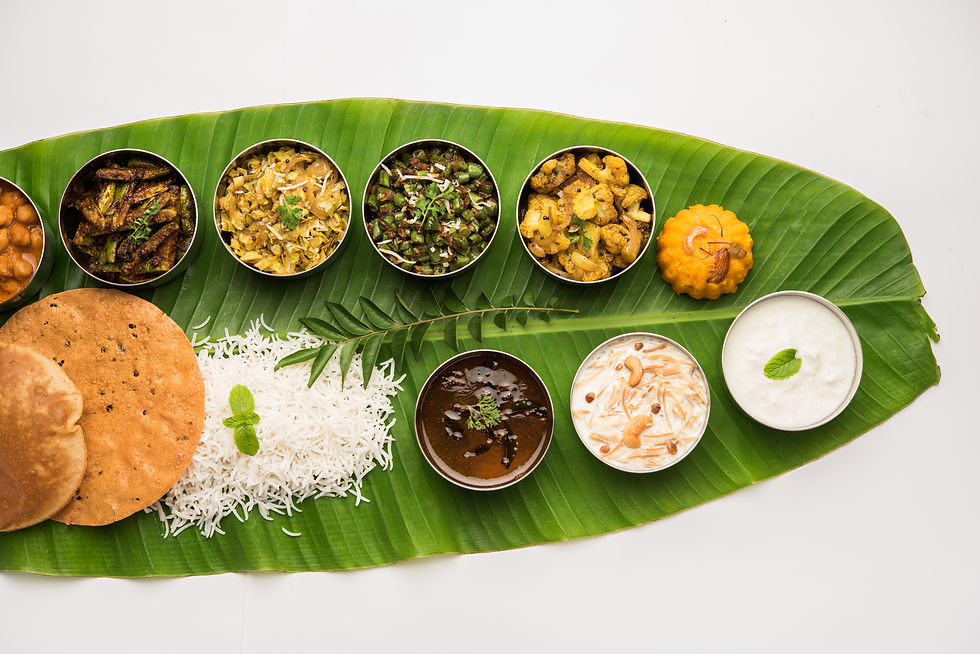
There is a moment at every South Indian wedding that needs no announcement. The moment the dining hall fills with the aroma of freshly tempered rasam, warm ghee, and steaming rice — guests instinctively quicken their step. The Kalyana Sapaadu is not just a meal. It is an emotion. And curating it well is one of the most skilled — and most underestimated — aspects of South Indian wedding planning.
At Haritham, with over 15 years of wedding catering experience across communities and cities, we can tell you this with certainty: the wedding menu is the one thing every single guest will remember.

It Is Not About How Many Dishes. It Is About the Right Dishes.
The most common mistake families make when planning a South Indian wedding menu is equating quantity with quality. In our early discussions with clients, there is almost always an enthusiastic first draft — a menu packed with 30-plus items, mixing cuisines, chasing trends. Our job is to gently redirect that enthusiasm towards intention.
A Muhurtham meal is bound by tradition. Payasam, kalandha saadham, pachidi, vadai — these are not optional additions. They are the soul of the spread. A Kalyana Sapaadu without these is like a wedding without the Mangalsutra — technically possible, but culturally incomplete.
Community Dictates the Menu. Never the Other Way Around.
South Indian weddings span vastly different traditions, and the Sampradayam of the family must guide every menu decision. A Tambrahm Iyer wedding calls for Vatha Kuzhambu, Kootu, and Morkuzhambu on the banana leaf, keeping the preparation free of onion and garlic. A Mudaliar household will expect a robust Kara Kuzhambu alongside their Saapadu. A Kerala wedding is incomplete without Olan, Avial, Erissery, and the ethereal Palada Pradhaman.
When we curate a menu, we do not offer a template. We ask questions — about the family's roots, their village traditions, the dishes that have been served at every wedding in their lineage for generations. That conversation is where the real menu begins.
The Format Shapes the Food
An Elai Sapaadu — the traditional banana leaf service — and a buffet are two entirely different dining experiences, and the menu must be designed around the format. Dishes like Mor Kali, Kozhukattai, and Avial shine in a sit-down leaf service where the guest is still and the server can ladle with precision and care. The same dishes become awkward and messy at a buffet, where a guest balances a plate in one hand.
Similarly, live counters should only feature dishes that are genuinely better made fresh — Jangiri, Halwa, Dosa, mal pua. Placing these on a static buffet is a disservice to both the dish and the guest.
Weather, Time, and Occasion Are Non-Negotiable Variables
A Muhurtham meal served at noon in Chennai summer demands lighter Kuzhambus, Moru, and cooling Pachidis. An evening reception in December invites heartier fare — rich Brinjal Gothsu, Poricha Kuzhambu, and warm Payasam served steaming.
The occasion matters equally. A Seemandham has its own ritual food requirements. A Sashtiabdhapoorthi calls for a different sensibility than a wedding Muhurtham. At Haritham, our catering team is trained to understand not just flavour, but the Dharma of each occasion — what is appropriate, what is auspicious, and what will honour the moment.
Reviving What Is Being Forgotten
One of our most deliberate commitments at Haritham is the revival of traditional dishes that most caterers no longer offer — not because guests don't want them, but because they require additional skill and effort. Koppara Pongal, Ukkara, Tirupullani Pal Payasam, Elai Adai, Poornam kozhukattai, Thirupagan, Chada chadayam, Pal Payasam cooked over slow flame — these are not just food. They are living memories for the elders at the table, and delightful discoveries for the younger guests.
Deciding a South Indian wedding menu is, at its finest, an act of cultural stewardship. When done right, every guest carries home not just a satisfied appetite, but a sense of having been truly honoured — which is, after all, the oldest meaning of Atithi Devo Bhava.


Comments