
Haldi Ceremony in Indian Weddings: Where Tradition Meets Celebration

Explore the meaning of the Haldi ceremony and how it beautifully evolved across Indian cultures into a vibrant, joy-filled celebration.
The Meaning Behind the Haldi Ritual
Haldi has always been more than a pre-wedding ritual; it is a moment of emotional and spiritual preparation before the wedding begins. Rooted in the use of turmeric for its cleansing and healing properties, the ceremony is designed to purify, protect, and bless the bride and groom as they step into a new phase of life.
In earlier settings, this ritual was intimate and deeply personal. Families gathered in familiar spaces—usually at home—where freshly prepared turmeric paste, often mixed with sandalwood or rosewater, was applied with care and intention. Every gesture carried meaning, whether spoken through blessings or expressed quietly through touch.
What stands out is not the simplicity, but the depth. Even without elaborate setups, the ritual created a pause in the wedding timeline—a moment for the family to come together and acknowledge the significance of what lies ahead.
South Indian Haldi: Rooted in Precision and Symbolism
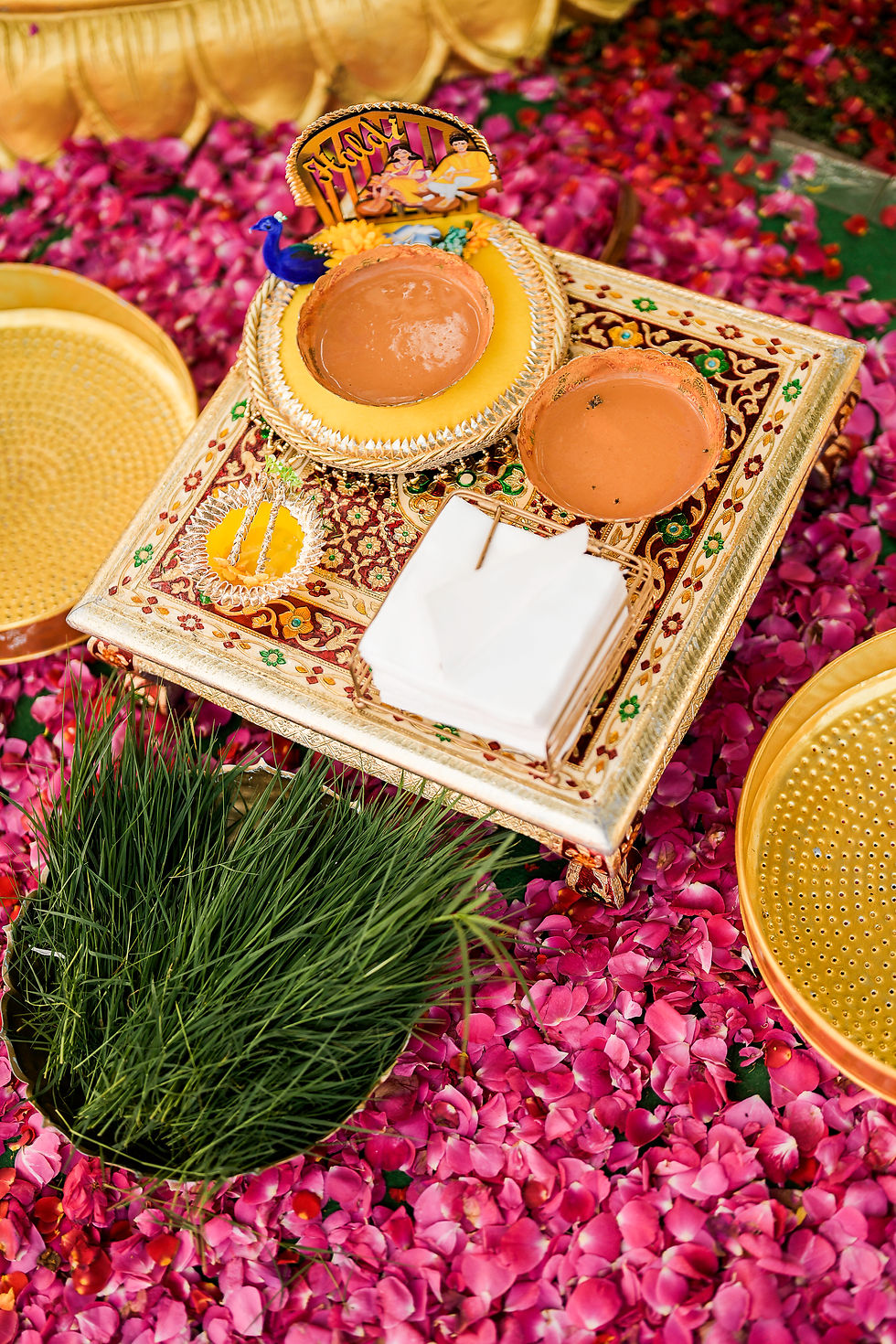
In South Indian weddings, the Haldi ceremony is often structured and intentional, with a strong emphasis on ritual accuracy and symbolic meaning. The turmeric paste is typically combined with ingredients like gingelly oil or milk, and the application follows a sequence led by close family members, often in a home setting or a minimal mandap arrangement.
The scale tends to be smaller, but the significance is not. The focus remains on invoking protection and warding off the drishti, ensuring that the bride and groom are surrounded by positive energy as they approach the wedding ceremony.
There is a certain calm to it. The experience is less about visual spectacle and more about maintaining the sanctity of tradition, where each step is guided by customs that have been preserved over generations.
North Indian Haldi: Expressive and Community-Driven
In North Indian weddings, particularly Punjabi celebrations, the Haldi ceremony carries a naturally vibrant and expressive energy. Traditionally, a paste known as ubtan—made of turmeric, gram flour, and mustard oil—was applied by family members, especially married women, as a symbol of prosperity, fertility, and protection.
Music and participation have always been part of this format. Folk songs, playful teasing, and group involvement created an atmosphere that felt lively while still staying rooted in ritual significance. Even in its earlier forms, Haldi here was never entirely quiet—it was shared, felt, and celebrated together.
What differentiates it is not intention, but expression. The ritual invites more outward participation, making it a collective experience rather than a purely intimate one.

The Evolution of Haldi: From Intimate to Immersive
Over time, Haldi has grown into one of the most anticipated and creatively expressive functions in an Indian wedding. Today, it is often designed as a standalone celebration, complete with curated décor, coordinated outfits, and thoughtfully planned experiences that bring together both families in a relaxed, joyful setting.
This evolution doesn’t dilute the ritual—it enhances its accessibility. By opening up participation and adding layers of music, color, and design, Haldi has transformed into a space where traditions are not just observed but experienced more fully by everyone present.
At Haritham Events, this balance is intentional. Working across cities like Chennai and Bangalore, the team approaches each Haldi with a clear focus—retain the ritual’s emotional core while shaping an atmosphere that feels effortless and celebratory, whether that means a serene floral setup for an intimate gathering or a vibrant, marigold-filled outdoor celebration where guests can truly immerse themselves in the moment.
The scale may change, but the core remains intact. The laughter, the shared interactions, and the visible joy simply make the ritual more inclusive and memorable for today’s couples.
A Tradition That Continues to Adapt
Haldi today reflects the way Indian weddings themselves are evolving—holding on to tradition while making space for personal expression. What was once a quiet family ritual has grown into a celebration that invites everyone to participate, without losing its original purpose.
There are still moments of stillness within the celebration. Amid the music and movement, when a parent gently applies Haldi or a grandparent offers a blessing, the ritual reconnects with its roots, reminding everyone why it exists in the first place.
That duality is what makes Haldi so unique. It carries both heritage and happiness in equal measure, adapting to changing times while continuing to serve as a meaningful and memorable start to the wedding journey.


Haldi Ceremony in Indian Weddings: Where Tradition Meets Celebration is one of the most joyful and vibrant pre-wedding rituals, filled with laughter, love, and cultural significance. This beautiful ceremony not only blesses the couple but also creates fun-filled moments with family and friends through music, dance, and playful traditions. The use of turmeric symbolizes purity, prosperity, and a glowing start to a new journey. From colorful décor to lively vibes, every detail adds charm to the celebration. To make it seamless and memorable, choosing the best wedding planner in Indore ensures perfect planning, creative execution, and a truly unforgettable Haldi experience.